
- Apps
 BYOB ‑ Bundle Gift Box Builder
Build your Own Box
 Easy Bundle ‑ Product Builder
All-In-One bundle builders
 Checkout Blocks & Customizer
Checkout Customization
 Qe Slider ‑ Carousel Slider
Elevates Revenue with Slick Slider


 Qe Seasonal Effects & Decor
Add Festive Seasonal Decorations
 Qe Quick Link Redirect
Fix Broken Links Effortlessly
 Qe Frequently Bought Together
Boost Sales with Smart Upsells
 QeApps ‑ Mobile App Builder
No-code Mobile App Builder
 Qe Product Compare
Allowing Shoppers to Compare Items
 Qe Multiship
Ship Items to Multiple Addresses
 Discount Bulk Volume Quantity
Create Custom Product Bundles
 Sticky Cart+ Fly Cart
Add Fly-to-Cart Animations.
 QeCart ‑ Slide Out Cart
Add Dynamic Slide-out cart
 Qe Speechify | Voice Search
Seamless Voice Search Functionality
 Qe FAQ Page & Product FAQs
Customizable Product FAQs
 ATC Button Animation
Add to Cart Button Animations

Explore Our Shopify Apps to Grow Your Store
- Check Our Apps


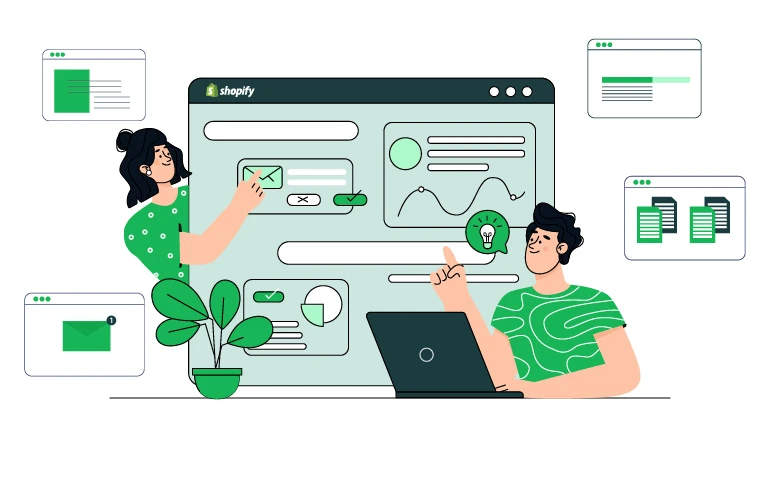
Running a successful Shopify app store is about more than just having great products. As your store begins to grow, the tools you use behind the scenes start playing a critical role in how efficiently you operate, market, and scale your business. Shopify’s app ecosystem offers thousands of solutions that help merchants automate tasks, improve conversions, manage inventory, and enhance the customer experience.
However, store owners often face a common question when browsing the Shopify App Store: Should I choose a free app or invest in a paid one?
At first glance, free apps seem like the obvious choice. After all, they reduce costs and still promise functionality. But as your store grows, the decision between free and paid apps becomes more strategic. The right choice can significantly influence your store’s efficiency, performance, and long-term scalability.
Let’s explore the differences between free and paid Shopify apps, their pros and cons, and how growing stores can make the best decision.
Understanding Free Shopify Apps
Free Shopify apps are attractive, especially for new or budget-conscious merchants. These apps typically provide essential features without requiring a subscription fee, allowing store owners to experiment with different functionalities without financial commitment.
Many free apps focus on solving a single problem. For example, a basic review app might allow customers to leave feedback, or a simple upsell app might suggest related products during checkout.
For new Shopify stores that are still validating their product-market fit, these apps can be extremely helpful. They allow merchants to test features like popups, discount campaigns, or basic analytics without investing heavily in tools before revenue becomes consistent.
Another advantage of free apps is accessibility. Installation is quick, the learning curve is usually minimal, and merchants can easily remove the app if it doesn’t meet expectations.
However, free apps often come with certain limitations. Many restrict the number of features available, the amount of data you can process, or the level of customization you can apply. Some also include branding, ads, or upgrade prompts that encourage users to move to a paid plan.
Support can also be limited. Since developers are not earning recurring revenue from free users, response times for technical issues or feature requests may be slower.
For small stores just starting out, these limitations may not be a major problem. But for growing businesses, they can become operational bottlenecks.
The Value of Paid Shopify Apps
Paid Shopify apps are designed with scalability in mind. They typically include more advanced features, deeper integrations, better customization, and stronger customer support.
As stores grow, merchants often need tools that go beyond basic functionality. For example, instead of a simple popup tool, they might need advanced conversion optimization features like A/B testing, automated segmentation, or behavioral triggers.
Paid apps also tend to offer better performance and reliability. Since the developers rely on subscription revenue, they continuously improve their products with updates, new features, and security enhancements.
Another important benefit is dedicated support. When your store relies on an app for critical operations, such as inventory management, shipping automation, or marketing campaigns, quick and effective support becomes essential. Paid apps often provide faster support channels, onboarding assistance, and documentation that help merchants resolve issues quickly.
Additionally, paid apps are usually designed to grow alongside your store. Many offer tiered pricing models based on usage, order volume, or advanced features, allowing merchants to scale their tools as their business expands.
Performance and Store Speed Considerations
One aspect that merchants often overlook when choosing apps is performance. Every installed app can impact your store’s speed, and slow-loading stores can negatively affect both customer experience and search rankings.
Free apps, especially those that rely on external scripts or ads, can sometimes introduce unnecessary code that slows down your storefront. Paid apps, on the other hand, often invest more in optimized performance and cleaner integrations.
For growing stores that depend heavily on conversion rates and user experience, this difference can directly influence revenue.
Choosing well-built apps, whether free or paid, is crucial for maintaining a fast and reliable store.
When Free Apps Make Sense
Free Shopify apps can be an excellent choice in several scenarios.
If you are launching a new store and still experimenting with your business model, free apps allow you to test different functionalities without committing to ongoing expenses.
They are also useful for solving smaller operational needs that don’t require advanced customization. For instance, a simple currency converter, basic product badge tool, or entry-level analytics feature might work perfectly well as a free solution.
Some free apps also act as “freemium” products. This means they offer a basic version for free while allowing merchants to upgrade once they need more advanced features.
For early-stage stores, this model can provide the flexibility to grow gradually without immediately increasing software costs.
When Paid Apps Become the Better Choice
As your store begins to gain traction, the limitations of free apps often become more visible.
Growing stores typically require more sophisticated tools to manage increasing traffic, higher order volumes, and more complex marketing campaigns. This is where paid apps start delivering significant value.
For example, automation becomes increasingly important as operations scale. Tools that automate upselling, email marketing, customer segmentation, and workflow management can save hours of manual work each week.
Paid apps also offer deeper insights into store performance. Advanced analytics and reporting tools help merchants understand customer behavior, identify growth opportunities, and optimize conversion strategies.
Most importantly, paid apps often integrate more smoothly with other tools in your tech stack, allowing you to build a more connected and efficient ecommerce ecosystem.
In many cases, the time saved and revenue gained from better tools far outweigh the monthly subscription cost.
Finding the Right Balance
The decision between free and paid Shopify apps doesn’t have to be all or nothing. Many successful stores use a combination of both.
Free apps can handle basic tasks, while paid apps support more strategic areas like marketing automation, upselling, and conversion optimization.
The key is to evaluate apps based on the value they bring to your store rather than just their price. Merchants should consider factors such as reliability, scalability, performance impact, customer support, and integration capabilities.
It’s also wise to periodically review your installed apps. As your store evolves, some tools may become redundant while others may need upgrading to support new growth goals.
Final Thoughts
Free Shopify apps are a great starting point for new merchants looking to experiment and control early-stage costs. They provide accessible solutions that help stores launch quickly and test different functionalities.
However, as your business grows, relying solely on free apps can limit your store’s efficiency and scalability. Paid Shopify apps often provide the advanced features, performance optimization, and dedicated support that growing stores need to compete in an increasingly sophisticated ecommerce landscape.
Ultimately, the best approach is not simply choosing free or paid, but choosing the right tools for the stage your store is in.
Investing in the right apps at the right time can streamline operations, improve customer experiences, and unlock new growth opportunities for your Shopify store.
Related Blogs



 [email protected]
 +91 95747 42204
 9th Floor, Solitaire Connect, Near Gallops Motors, SG Highway, Ahmedabad, Gujarat 380015


