
- Apps


 Easy Bundle ‑ Product Builder
All-In-One bundle builders
 Qe Slider ‑ Carousel Slider
Elevates Revenue with Slick Slider
 Qe Seasonal Effects & Decor
Add Festive Seasonal Decorations
 Qe Quick Link Redirect
Fix Broken Links Effortlessly
 Qe Frequently Bought Together
Boost Sales with Smart Upsells
 QeApps ‑ Mobile App Builder
No-code Mobile App Builder
 Qe Product Compare
Allowing Shoppers to Compare Items
 Discount Bulk Volume Quantity
Create Custom Product Bundles
 Sticky Cart+ Fly Cart
Add Fly-to-Cart Animations.
 QeCart ‑ Slide Out Cart
Add Dynamic Slide-out cart
 Qe Speechify | Voice Search
Seamless Voice Search Functionality
 Qe FAQ Page & Product FAQs
Customizable Product FAQs
 ATC Button Animation
Add to Cart Button Animations

Explore Our Shopify Apps to Grow Your Store
- Check Our Apps


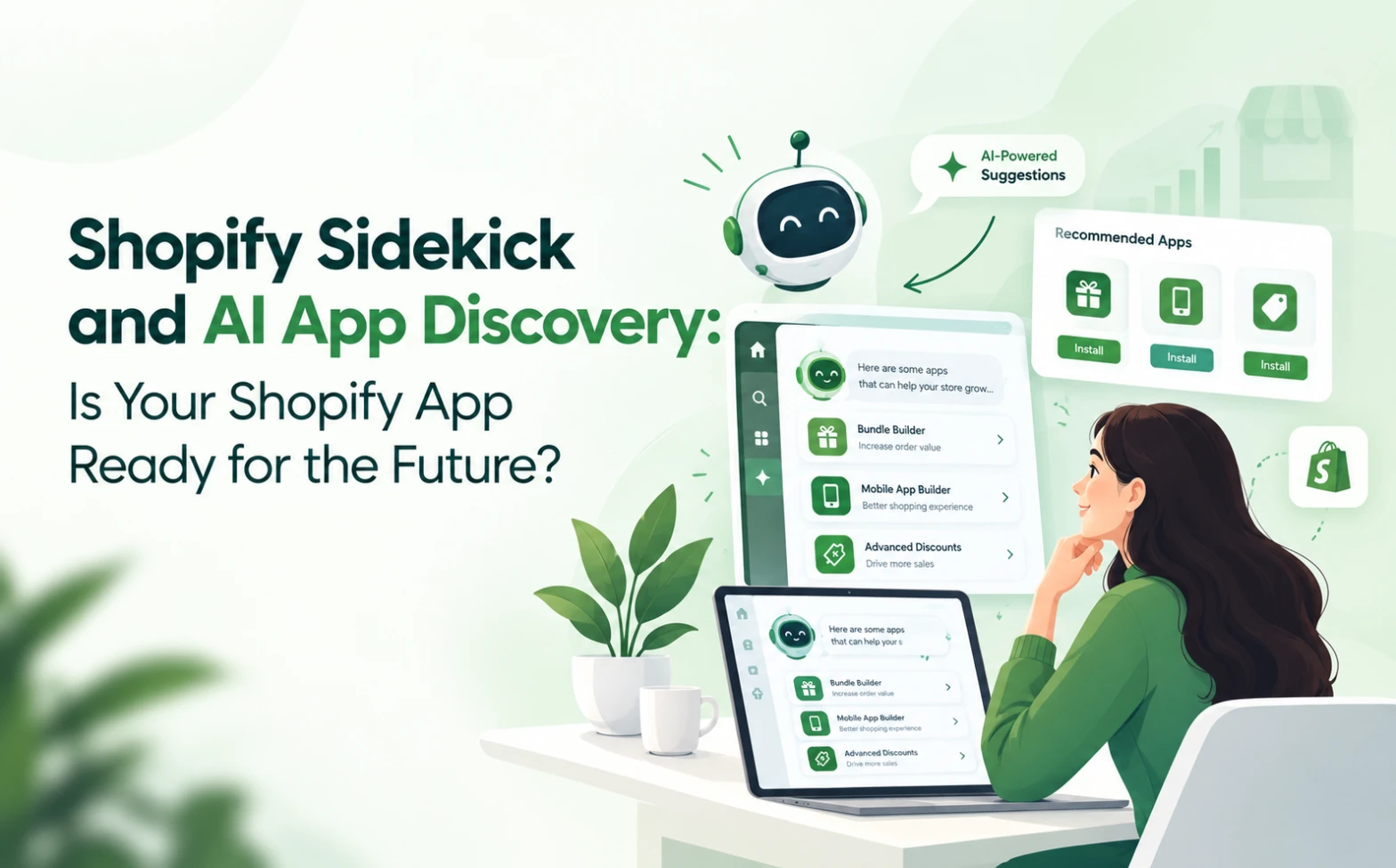
Shopify Sidekick could change how merchants discover, evaluate and use Shopify apps. For app developers, now is the time to rethink app visibility, user experience and AI readiness.
Imagine a Shopify merchant who wants to let customers create their own gift boxes. Instead of searching the Shopify App Store for a bundle builder, comparing dozens of apps and reading through feature lists, they simply ask an AI assistant:
“How can I let my customers create their own gift boxes using products from my store?”
This simple question highlights an important shift in e-commerce. Merchants increasingly want direct answers to business problems, not just a list of software options.
Shopify Sidekick is part of this evolving experience. As Shopify continues to develop AI-powered tools for merchants, Shopify app developers have an important question to consider: Will AI understand what your app does, who it helps and when it might be useful?
For app businesses, this is an opportunity to rethink how products are positioned, discovered and experienced.
At ShopQuest 2026 in Bengaluru, Shopify Sidekick emerged as an important topic for the Shopify ecosystem. For developers, the broader takeaway is clear: preparing for AI-driven experiences should become part of a long-term app growth strategy.
Let’s explore what Shopify Sidekick could mean for app discovery and how developers can prepare.
1. From Searching for Apps to Describing Business Problems
Traditionally, merchants discover Shopify apps through keyword-based searches.
For example, a merchant who wants to offer product bundles might search for:
- Shopify bundle builder
- Custom gift box app
- Product bundling software
- Build-your-own bundle Shopify app
They then review search results, compare ratings, examine screenshots, check pricing and decide which app best suits their needs.
This process works, but it assumes merchants already know what type of app they need.
What happens when they don’t?
A merchant might ask Sidekick how to increase average order value, simplify product bundling or improve the shopping experience without knowing which app category could help.
This is where AI-powered discovery becomes interesting.
Rather than starting with a specific keyword, a merchant can describe the outcome they want. An AI-powered experience may help them explore relevant approaches or tools, depending on its available capabilities.
The potential discovery journey looks like this:
Merchant’s Problem → AI Assistance → Relevant Solution → App Discovery → Installation
This is different from traditional app discovery because the starting point is the merchant’s intent rather than a software category.
For Shopify app developers, this means explaining the problem an app solves may become just as important as describing its features.
2. Could Shopify Sidekick Become Another App Discovery Channel?
Shopify App Store optimisation remains an important part of growing a Shopify app. Developers invest time in keyword research, listing descriptions, ratings, screenshots, performance and conversion optimisation.
These fundamentals still matter.
However, developers should also consider how their products might be understood in AI-powered Shopify experiences.
For example, an app listing might describe a product as a “bundle builder.” That explains the category, but it may not communicate every problem the app can solve.
A more useful explanation could be:
“Let shoppers create personalised product bundles or gift boxes directly from your Shopify store.”
This description communicates the functionality and connects it to a real merchant need.
There are two discovery approaches to consider:
Traditional app discovery
Merchant searches → App Store results → App listing → Installation → Onboarding
Emerging AI-assisted discovery
Merchant describes a problem → AI explores possible solutions → Relevant app discovery → Evaluation → Installation → Onboarding
These approaches can complement each other. AI-assisted discovery does not make App Store SEO irrelevant. Instead, it gives developers another reason to make their app’s purpose, capabilities and benefits easy to understand.
It is important to remember that AI recommendations are not guaranteed. Developers should treat Sidekick readiness as an opportunity to prepare for evolving discovery experiences, rather than a promise of increased visibility.
3. Your Shopify App Listing Still Matters
Even if a merchant discovers an app through an AI-assisted experience, they still need a reason to trust it.
Your Shopify App Store listing may be one of the first places they look when evaluating the product.
A strong listing should answer three questions quickly.
Is this app right for my store?
Make your target audience and use case clear.
Instead of relying on broad statements such as “Improve your business with our powerful solution,” explain which merchants the app serves and what they can accomplish with it.
Does it solve my problem?
Focus on outcomes, not just technical features.
For example, rather than simply listing “Product bundling,” explain how the app helps merchants offer product combinations, create gift boxes or provide customers with more purchasing choices—where those capabilities are supported.
Can I see how it works?
Use clear, accurate screenshots and product demonstrations.
Your first image should communicate the app’s primary purpose. Additional images can explain important features, workflows and benefits.
Keep the presentation simple. Avoid overcrowded graphics, vague claims and screenshots that do not reflect the actual product.
The objective is not to oversell. It is to help merchants understand the value of your app and make an informed decision.
A clear app listing supports a better experience regardless of whether a merchant arrives through search, a recommendation or another discovery channel.
4. What Does It Mean to Make Your App Sidekick-Ready?
Being ready for AI-powered discovery involves more than adding the words “AI-ready” to your app listing.
Developers should look at their products from both a communication and a technical perspective.
Start by asking the following questions.
Clearly explain your app’s capabilities
Can someone unfamiliar with your product understand what it does?
Describe its main functions, supported use cases, intended audience and limitations in straightforward language. Keep your website, App Store listing and in-app explanations consistent.
Understand the merchant problems you solve
Identify the specific challenges your target customers face.
A bundle-building app, for example, may help merchants offer custom product combinations. An analytics app may help merchants investigate sales performance.
The more precisely you understand these use cases, the easier it becomes to communicate your product’s value.
Review your app’s data and integrations
Depending on the capabilities available to your application and the relevant Shopify interfaces, consider whether useful information can be made available securely and appropriately.
For example, relevant read-only information may help support certain workflows when the necessary access and integration capabilities exist.
Do not assume Sidekick can automatically access every app’s data. Any integration must respect the platform’s supported capabilities, permissions, security requirements and merchant consent.
Make useful workflows easier to reach
Think about what a merchant wants to accomplish after identifying a problem.
Can they find the relevant feature quickly? Are instructions clear? Does the workflow reduce unnecessary steps?
A useful product experience connects the merchant’s question with a practical next step.
Ultimately, aim for consistency between your app listing, product capabilities, AI-related opportunities and merchant outcomes.
5. Build Around Merchant Intent, Not Just Features
One of the most valuable changes Shopify app developers can make is to think beyond feature lists.
Instead of asking only, “What feature should we build next?”, ask:
“What questions do merchants ask before they realise they need our app?”
Consider these examples:
| Traditional feature-focused thinking | Merchant-intent thinking |
| Product bundling | How can customers create their own bundles? |
| Sales analytics | Why have my sales changed this month? |
| Gift box builder | How can I offer personalised gift boxes? |
| Recently viewed products | How can shoppers find products they looked at earlier? |
The second column starts with a real business need.
This approach can help teams improve product messaging, prioritise useful features, create better onboarding experiences and develop more relevant educational content.
It can also reveal gaps between what developers believe their product offers and what merchants actually need.
Talk to customers, review support conversations and pay attention to recurring questions. These insights can guide product improvements more effectively than adding features without a clear purpose.
The goal is not to build for every possible question. It is to solve the right problems for your intended users.
6. Why App Quality and Merchant Experience Still Matter
AI-powered discovery may create new opportunities, but visibility alone cannot sustain app growth.
Merchants still need products that work reliably, deliver meaningful value and are easy to use.
Developers should regularly review:
- Product performance: Does the app work reliably and provide a smooth experience?
- App Store listing: Are the value proposition, screenshots and use cases clear?
- Merchant feedback: What do reviews and support requests reveal about user needs?
- Onboarding: Can new users understand the product and reach value quickly?
- App quality: Are bugs, usability issues and unnecessary steps being addressed?
- Search visibility: Can merchants discover the app through relevant searches?
- AI readiness: Are there supported opportunities to improve how the product’s capabilities and workflows can be understood or accessed?
These areas work together.
An app with unclear positioning may struggle to communicate its value. An app with a strong listing but a frustrating onboarding process may struggle to retain users.
Rather than treating an app launch as the finish line, treat it as the beginning of continuous improvement.
Long-term growth depends on understanding merchants, improving the product and communicating its value consistently.
7. Five Practical Steps Shopify App Developers Can Take Now
You do not need to rebuild your entire application to start preparing for changing discovery experiences.
Begin with these five steps.
Step 1: Experience your app as a merchant.
Install your app and complete the main workflows yourself. Identify confusing steps, unclear instructions and opportunities to improve usability.
Step 2: Improve your Shopify App Store listing.
Review the title, opening description, screenshots and feature explanations. Make sure the primary use case and value proposition are immediately clear.
Step 3: Listen to your customers.
Speak with merchants, analyse support questions and review feedback. Look for recurring problems that your app can solve or explain more effectively.
Step 4: Identify potential Sidekick-related opportunities.
List the merchant questions your app could help address. Explore relevant integrations, data access and workflows only where supported by Shopify’s available capabilities and your app’s permissions.
Step 5: Measure the complete customer journey.
Track app listing visits, installations, onboarding completion and meaningful product engagement where appropriate. Use reliable analytics to understand what attracts merchants and what helps them succeed.
These steps can improve your app’s foundations while helping your team evaluate emerging AI-related opportunities more thoughtfully.
8. How QeApps Is Thinking About the Future of Shopify Apps
At QeApps, we see the evolution of Shopify Sidekick and AI-powered discovery as an important reason to keep looking at app development from the merchant’s perspective.
The question is not simply how to build more features or publish more apps. It is how to make products relevant, understandable and useful to the people who need them.
That means considering two important areas.
First, how discoverable are our apps?
We need to communicate product value clearly, maintain useful App Store listings and help merchants understand the problems our solutions address.
Second, how can our apps fit into an evolving AI
Related Blogs




 [email protected]
 +91 95747 42204
 9th Floor, Solitaire Connect, Near Gallops Motors, SG Highway, Ahmedabad, Gujarat 380015


